Training Workshops
IFoDS 2026 offers workshops on Friday, July 3, 2026
- Haoda Fu: Tutorial on Deep Learning and Generative AI
- Jun Yan: Academic Writing in Statistics and Data Science
Tutorial on Deep Learning and Generative AI
Outline
In an era where AI technologies are transforming industries, understanding their foundations and applications is essential for a wide range of professionals. This course is designed to equip statisticians, biostatisticians, researchers, and decision-makers with the mental models needed to navigate and leverage AI effectively. Whether you’re a decision-maker aiming to make informed choices about AI tools, a researcher seeking to integrate AI into your work, or a statistician looking to build advanced models, this course offers a valuable gateway to the world of AI.
Focusing on deep learning and generative AI, participants will gain hands-on experience with PyTorch, learn foundational concepts, and explore state-of-the-art architectures such as CNNs, GNNs, ResNet, U-Net, and transformers. The course also delves into applications of these models in medical imaging and drug discovery, as well as cutting-edge generative AI techniques like GANs, VAEs, DDPM, score-based models, and the mechanics behind large language models (LLMs).
By bridging technical knowledge with practical insights, this course empowers participants to apply AI in healthcare, research, and beyond, making it an indispensable resource for those seeking to understand and shape the future of AI in their fields.
The following are the outlines of the short course.
- Why: History of Deep Learning and Generative AI
- Build Our First Neural Network Model from Scratch
- Let Us Code Together
- Build Our First Deep Learning Model for Computer Vision
- Sequence Classification Model
- Nuts and Bolts for LLM: Sequence-to-Sequence Models
- Generative AI Family
- Advanced Topics and Extensions: Generative AI on Smooth Manifolds
- Final Thoughts
Prerequisites
Basic knowledge on linear regression and programming. Python and PyTorch will be used for the computer session.
Instructor
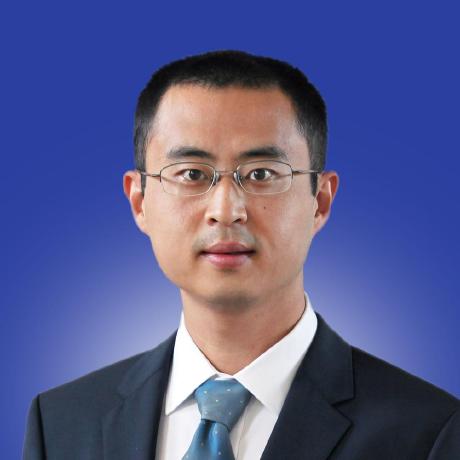 Dr.
Haoda is Head of Exploratory Biostatistics in Amgen, before
that he was an Associate Vice President and an Enterprise Lead
for Machine Learning, Artificial Intelligence, from Eli Lilly
and Company. Dr. Haoda Fu is a Fellow of ASA (American
Statistical Association), and IMS Fellow (Institute of
Mathematical Statistics). He is also an adjunct professor of
biostatistics department, Univ. of North Carolina Chapel Hill
and Indiana university School of Medicine. Dr. Fu received his
Ph.D. in statistics from University of Wisconsin-Madison in 2007
and joined Lilly after that. Since he joined Lilly, he is very
active in statistics and data science methodology research. He
has more than 100 publications in the areas, such as Bayesian
adaptive design, survival analysis, recurrent event modeling,
personalized medicine, indirect and mixed treatment comparison,
joint modeling, Bayesian decision making, and rare events
analysis. In recent years, his research area focuses on machine
learning and artificial intelligence. His research has been
published in various top journals including JASA, JRSS-B,
Biometrika, Biometrics, ACM, IEEE, JAMA, Annals of Internal
Medicine etc.. He has been teaching topics of machine learning
and AI in large industry conferences including teaching this
topic in FDA workshop. He was board of directors for statistics
organizations and program chairs, committee chairs such as ICSA,
ENAR, and ASA Biopharm session. He is a COPSS Snedecor Awards
committee member from 2022-2026, and also served as an associate
editor for JASA theory and method from 2023, and JASA
application and case study from 2025-2027.
Dr.
Haoda is Head of Exploratory Biostatistics in Amgen, before
that he was an Associate Vice President and an Enterprise Lead
for Machine Learning, Artificial Intelligence, from Eli Lilly
and Company. Dr. Haoda Fu is a Fellow of ASA (American
Statistical Association), and IMS Fellow (Institute of
Mathematical Statistics). He is also an adjunct professor of
biostatistics department, Univ. of North Carolina Chapel Hill
and Indiana university School of Medicine. Dr. Fu received his
Ph.D. in statistics from University of Wisconsin-Madison in 2007
and joined Lilly after that. Since he joined Lilly, he is very
active in statistics and data science methodology research. He
has more than 100 publications in the areas, such as Bayesian
adaptive design, survival analysis, recurrent event modeling,
personalized medicine, indirect and mixed treatment comparison,
joint modeling, Bayesian decision making, and rare events
analysis. In recent years, his research area focuses on machine
learning and artificial intelligence. His research has been
published in various top journals including JASA, JRSS-B,
Biometrika, Biometrics, ACM, IEEE, JAMA, Annals of Internal
Medicine etc.. He has been teaching topics of machine learning
and AI in large industry conferences including teaching this
topic in FDA workshop. He was board of directors for statistics
organizations and program chairs, committee chairs such as ICSA,
ENAR, and ASA Biopharm session. He is a COPSS Snedecor Awards
committee member from 2022-2026, and also served as an associate
editor for JASA theory and method from 2023, and JASA
application and case study from 2025-2027.
Academic Writing in Statistics and Data Science
Outline
Targeting graduate students and early-career researchers in statistics/data science, this short course introduces a principled workflow for academic writing with the full lifecycle from idea organization to polished manuscript. The course begins with the structure of statistical papers, emphasizing strong topic sentences, coherent paragraph development, and disciplined use of citations. It then addresses common writing pitfalls specific to quantitative research, including clarity in model description, interpretation of results, and alignment between methods and conclusions. A central component of the course focuses on LaTeX typesetting, where participants will learn best practices for structuring documents, managing references, formatting equations and tables, and maintaining consistency across sections. The course further integrates reproducible writing tools, including Quarto and Git-based workflows, to connect narrative, code, and results in a unified framework. Practical examples drawn from real manuscripts will be used throughout to illustrate both effective and ineffective practices. By the end of the session, participants will have a concrete template and workflow for producing clear, reproducible, and publication-ready research papers.
Prerequisites
Interest in improving writing skills. Experience would be a plus.
Instructor
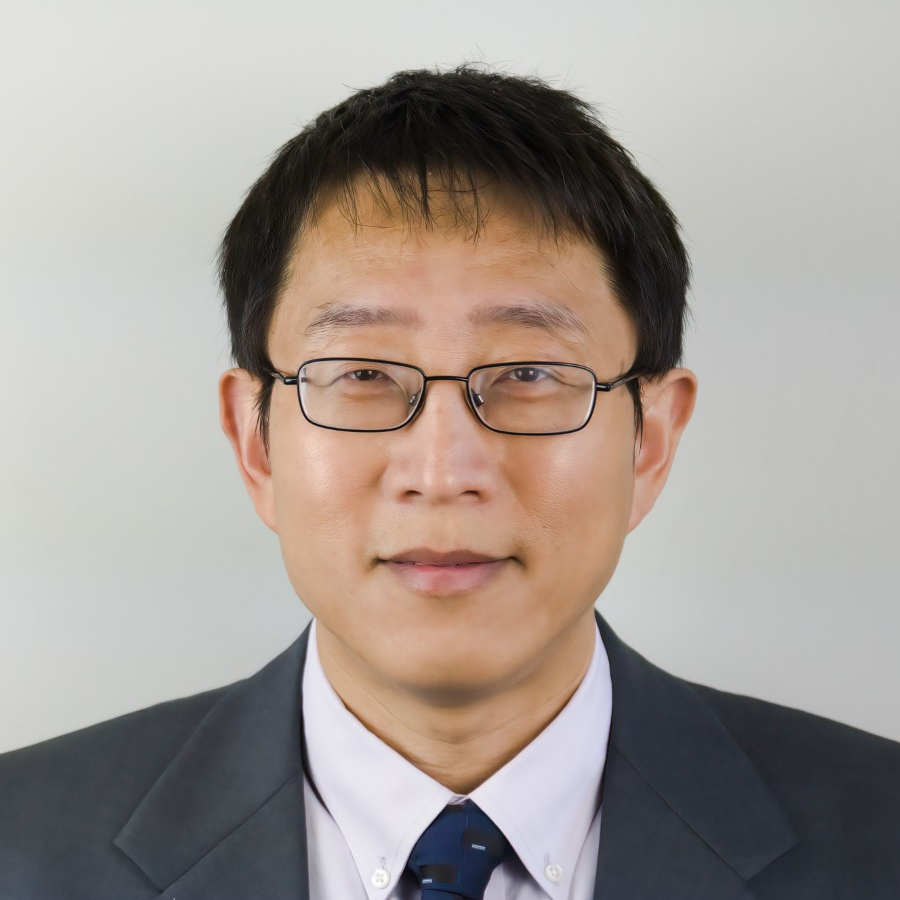 Dr. Jun Yan
is a Professor in the Department of Statistics at the University
of Connecticut and a Research Fellow at the Center for
Population Health at UConn Health. He earned his Ph.D. in
Statistics from the University of Wisconsin–Madison in 2003.
Prior to joining UConn in 2007, he spent four years at the
University of Iowa. Dr. Yan’s methodological research spans
networks, spatial extremes, measurement error, survival
analysis, clustered data analysis, and statistical computing,
often motivated by cross-disciplinary collaborations. His
applied work focuses on environmental sciences, public health,
and sports, with notable contributions to statistical methods
for the detection and attribution of climate change. Committed
to open science, he and his collaborators have developed and
maintain a suite of open-source R packages. Since 2020, he has
served as Editor of the Journal of Data Science. He is a Fellow
of both the American Statistical Association and the Institute
of Mathematical Statistics.
Dr. Jun Yan
is a Professor in the Department of Statistics at the University
of Connecticut and a Research Fellow at the Center for
Population Health at UConn Health. He earned his Ph.D. in
Statistics from the University of Wisconsin–Madison in 2003.
Prior to joining UConn in 2007, he spent four years at the
University of Iowa. Dr. Yan’s methodological research spans
networks, spatial extremes, measurement error, survival
analysis, clustered data analysis, and statistical computing,
often motivated by cross-disciplinary collaborations. His
applied work focuses on environmental sciences, public health,
and sports, with notable contributions to statistical methods
for the detection and attribution of climate change. Committed
to open science, he and his collaborators have developed and
maintain a suite of open-source R packages. Since 2020, he has
served as Editor of the Journal of Data Science. He is a Fellow
of both the American Statistical Association and the Institute
of Mathematical Statistics.