Keynote Sessions
Haoda Fu, Head of Exploratory Biostatistics, Amgen
Title: Leading Science and Clinical Research-Biostatistics in the Age of AI
Abstract: AI is rapidly transforming society and has emerged as the defining technology of our generation. Its influence spans across industries, with significant implications for scientific research, healthcare, and drug development. In this work, we review the historical progression of AI and its growing role in pharmaceutical research, highlighting how AI-driven methodologies are revolutionizing drug discovery and development processes. As the integration of AI in biostatistics and clinical research deepens, scientists must cultivate essential skills to remain effective in this evolving landscape. We discuss four critical competencies for scientists working in the AI era: AI Mindsets, AI Communication, AI Integration, and AI-Enabled Innovation. Looking ahead, we explore the potential future impact of AI on the pharmaceutical data analytics ecosystem. The convergence of AI with biostatistics presents both challenges and opportunities, requiring a thoughtful balance between leveraging AI’s capabilities and maintaining rigorous scientific and ethical standards. By embracing AI-driven approaches while upholding core statistical principles, the next generation of scientists can contribute to more efficient, data-driven advancements in clinical research. This discussion aims to provide insights into the evolving role of AI in biostatistics and inspire forward-thinking strategies for navigating the intersection of AI and scientific discovery in the pharmaceutical industry.
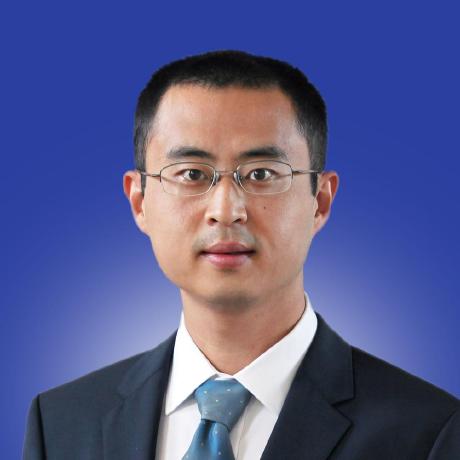 Dr.
Haoda is Head of Exploratory Biostatistics in Amgen, before
that he was an Associate Vice President and an Enterprise Lead
for Machine Learning, Artificial Intelligence, from Eli Lilly
and Company. Dr. Haoda Fu is a Fellow of ASA (American
Statistical Association), and IMS Fellow (Institute of
Mathematical Statistics). He is also an adjunct professor of
biostatistics department, Univ. of North Carolina Chapel Hill
and Indiana university School of Medicine. Dr. Fu received his
Ph.D. in statistics from University of Wisconsin-Madison in 2007
and joined Lilly after that. Since he joined Lilly, he is very
active in statistics and data science methodology research. He
has more than 100 publications in the areas, such as Bayesian
adaptive design, survival analysis, recurrent event modeling,
personalized medicine, indirect and mixed treatment comparison,
joint modeling, Bayesian decision making, and rare events
analysis. In recent years, his research area focuses on machine
learning and artificial intelligence. His research has been
published in various top journals including JASA, JRSS-B,
Biometrika, Biometrics, ACM, IEEE, JAMA, Annals of Internal
Medicine etc.. He has been teaching topics of machine learning
and AI in large industry conferences including teaching this
topic in FDA workshop. He was board of directors for statistics
organizations and program chairs, committee chairs such as ICSA,
ENAR, and ASA Biopharm session. He is a COPSS Snedecor Awards
committee member from 2022-2026, and also served as an associate
editor for JASA theory and method from 2023, and JASA
application and case study from 2025-2027.
Dr.
Haoda is Head of Exploratory Biostatistics in Amgen, before
that he was an Associate Vice President and an Enterprise Lead
for Machine Learning, Artificial Intelligence, from Eli Lilly
and Company. Dr. Haoda Fu is a Fellow of ASA (American
Statistical Association), and IMS Fellow (Institute of
Mathematical Statistics). He is also an adjunct professor of
biostatistics department, Univ. of North Carolina Chapel Hill
and Indiana university School of Medicine. Dr. Fu received his
Ph.D. in statistics from University of Wisconsin-Madison in 2007
and joined Lilly after that. Since he joined Lilly, he is very
active in statistics and data science methodology research. He
has more than 100 publications in the areas, such as Bayesian
adaptive design, survival analysis, recurrent event modeling,
personalized medicine, indirect and mixed treatment comparison,
joint modeling, Bayesian decision making, and rare events
analysis. In recent years, his research area focuses on machine
learning and artificial intelligence. His research has been
published in various top journals including JASA, JRSS-B,
Biometrika, Biometrics, ACM, IEEE, JAMA, Annals of Internal
Medicine etc.. He has been teaching topics of machine learning
and AI in large industry conferences including teaching this
topic in FDA workshop. He was board of directors for statistics
organizations and program chairs, committee chairs such as ICSA,
ENAR, and ASA Biopharm session. He is a COPSS Snedecor Awards
committee member from 2022-2026, and also served as an associate
editor for JASA theory and method from 2023, and JASA
application and case study from 2025-2027.
Hansheng Wang, Professor of Business Statistics and Econometrics, Guanghua School of Management, Peking University
Title: Speech Emotion and AI-Driven Intelligent Marketing
Abstract: This report focuses on speech emotion recognition technology and its applications in AI-driven intelligent marketing, examining three practical scenarios in the automotive industry: live streaming and short-video marketing, telemarketing, and AI tele-robot marketing, to explore its technical framework, implementation, and business value. For live streaming and short-video marketing, a CNN-based speech emotion recognition model is built using a dataset of 9,303 audio clips with MFCC features to quantify hosts’ positive emotions, a key factor in conversion. For telemarketing customer conversion prediction, an emotion-enhanced dual-attention model fusing speech Mel spectrograms and textual dialogue data is proposed, achieving an AUC of 0.921 and significantly improving efficiency while reducing costs. The report also establishes a state-space model-based AI tele-robot framework integrating ASR, TTS, and large language models, with continuously enhanced conversion performance. Finally, a theoretical framework for intelligent speech marketing centered on cost, trust, and benefit is proposed, highlighting the technology’s extensibility to education, healthcare, and public sectors and providing a reference for the integration of speech technology and digital marketing.
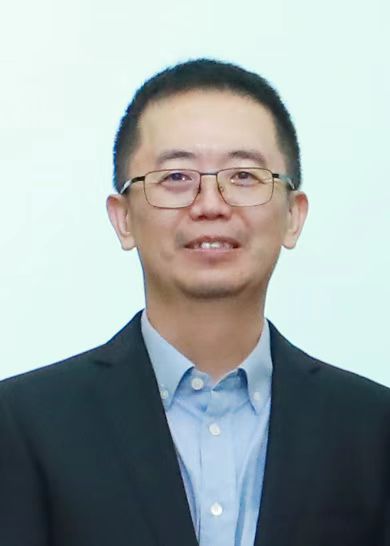 Dr.
Hannsheng Wang is Professor and PhD Supervisor, Department
of Business Statistics and Econometrics, Guanghua School of
Management, Peking University. He is a recipient of the National
Science Fund for Distinguished Young Scholars, a Changjiang
Distinguished Professor appointed by the Ministry of Education,
and the Founding President of the Young Statisticians
Association of the Chinese Industrial Statistics Teaching and
Research Association. He is an IMS Fellow, ASA Fellow, and
Elected Member of the ISI. He has served as Associate Editor or
Editor for 10 international academic journals. He has published
over 200 papers in professional journals worldwide, co-authored
one English monograph and five Chinese textbooks. He has been
selected as an Elsevier Highly Cited Chinese Researcher in
Mathematics (2014–2019), Applied Economics (2020), and
Statistics (2021–2025).
Dr.
Hannsheng Wang is Professor and PhD Supervisor, Department
of Business Statistics and Econometrics, Guanghua School of
Management, Peking University. He is a recipient of the National
Science Fund for Distinguished Young Scholars, a Changjiang
Distinguished Professor appointed by the Ministry of Education,
and the Founding President of the Young Statisticians
Association of the Chinese Industrial Statistics Teaching and
Research Association. He is an IMS Fellow, ASA Fellow, and
Elected Member of the ISI. He has served as Associate Editor or
Editor for 10 international academic journals. He has published
over 200 papers in professional journals worldwide, co-authored
one English monograph and five Chinese textbooks. He has been
selected as an Elsevier Highly Cited Chinese Researcher in
Mathematics (2014–2019), Applied Economics (2020), and
Statistics (2021–2025).
Tian Zheng, Professor of Statistics, Columbia University
Title: Statistics Beyond Models: Data, Decisions, and Workflows
Abstract: With the rise of data science and AI, statistical reasoning increasingly operates within workflows that link data processing, analysis, and decision-making, often extending beyond the boundaries of individual statistical models. The growing use of generative AI tools in these workflows can distance data-driven practice from statistical rigor when used without appropriate guardrails, but it also creates opportunities for statisticians to play a more central role in designing, evaluating, and overseeing end-to-end data workflows as technical barriers to entry are lowered. In this talk, I draw on collaborations in climate science, ecology, and public health research to show how key statistical challenges arise across workflows, including the “first mile” of data processing and the “last mile” of translating results into insights. I conclude by discussing implications for statistical research training, arguing that working across workflows, experimenting with and evaluating automated analyses, and understanding how uncertainty propagates to decisions are becoming central to statistical education.
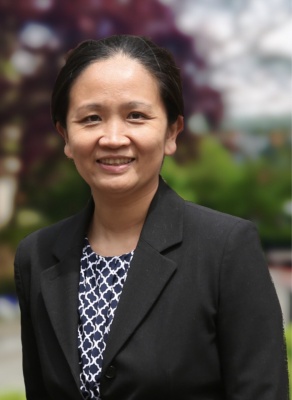 Dr. Tian
Zheng Professor of Statistics at Columbia University. She
obtained her Ph.D. from Columbia in 2002. In her research, she
develops novel methods for exploring and understanding patterns
in complex data from different application domains such as
biology, psychology, climatology, and etc. Her current projects
are in the fields of statistical machine learning,
spatiotemporal modeling, and social network analysis,
collaborating with ecologists and earth scientists. Professor
Zheng’s research has been recognized by the 2008 Outstanding
Statistical Application Award from the American Statistical
Association (ASA), the Mitchell Prize from ISBA, and a Google
research award. She became a Fellow of the American Statistical
Association in 2014. Professor Zheng is passionate about
education and mentoring. From 2015-2016, she was one of the
series creators for Columbia’s edX Massive Online Open Course
(MOOC) series on data science. From 2017-2020, she was associate
director for education of Columbia Data Science Institute. She
led a number of education programs, including the MS in Data
Science program at Columbia, data science capstone projects with
data ethics components, DSI Scholars program that connects
students with academic research projects in data science, the
Collaboratory program for interdisciplinary data science
curriculum development, a number of popular Data Science boot
camps. She created DSI’s working group on Data Science Education
and has been coordinating data science education efforts across
Columbia. Professor Zheng is the receipt of the 2017 Columbia’s
Presidential Award for Outstanding Teaching. In 2021, she was
recognized by a Lenfest Distinguished Columbia Faculty Award
that recognizes the excellence of faculty as teachers and
mentors of both undergraduate and graduate students.
Dr. Tian
Zheng Professor of Statistics at Columbia University. She
obtained her Ph.D. from Columbia in 2002. In her research, she
develops novel methods for exploring and understanding patterns
in complex data from different application domains such as
biology, psychology, climatology, and etc. Her current projects
are in the fields of statistical machine learning,
spatiotemporal modeling, and social network analysis,
collaborating with ecologists and earth scientists. Professor
Zheng’s research has been recognized by the 2008 Outstanding
Statistical Application Award from the American Statistical
Association (ASA), the Mitchell Prize from ISBA, and a Google
research award. She became a Fellow of the American Statistical
Association in 2014. Professor Zheng is passionate about
education and mentoring. From 2015-2016, she was one of the
series creators for Columbia’s edX Massive Online Open Course
(MOOC) series on data science. From 2017-2020, she was associate
director for education of Columbia Data Science Institute. She
led a number of education programs, including the MS in Data
Science program at Columbia, data science capstone projects with
data ethics components, DSI Scholars program that connects
students with academic research projects in data science, the
Collaboratory program for interdisciplinary data science
curriculum development, a number of popular Data Science boot
camps. She created DSI’s working group on Data Science Education
and has been coordinating data science education efforts across
Columbia. Professor Zheng is the receipt of the 2017 Columbia’s
Presidential Award for Outstanding Teaching. In 2021, she was
recognized by a Lenfest Distinguished Columbia Faculty Award
that recognizes the excellence of faculty as teachers and
mentors of both undergraduate and graduate students.